Methodology
GafferLens publishes analytical estimates about how managers work. This page sets out exactly how those estimates are produced and where their limits are.
Last updated 21 August 2026
What is fact and what is analysis
Two kinds of information appear on this site. Facts are verifiable records: names, dates of birth, appointment and departure dates, clubs, competitions and match records. Analysis is GafferLens interpretation: GafferScore, tactical ratings, style descriptors, tactical verdicts, rankings and simulations.
Analysis is labelled wherever it appears and carries a confidence level. A rating is never presented as a measured fact.
GafferScore
A stable, career-weighted view: sustained results, trophies, level of competition and longevity. It moves slowly and is not driven by a single run of matches.
- Results vs expectation20%
- Attacking performance12.5%
- Defensive performance12.5%
- Tactical control10%
- League / competition strength8%
- Player development8%
- Tactical adaptability7%
- Big-game performance7%
- Recent performance5%
- Experience5%
- Trophy achievement5%
On-form score
A dynamic view of the current moment: results, performance level and momentum across the last ten competitive matches, recency weighted.
- Recent results35%
- Performance vs expectation20%
- Opponent strength15%
- Attacking performance10%
- Defensive performance10%
- Underlying performance / control10%
Form is measured over the most recent competitive matches in the manager's current job only. It is never blended with career record, and a manager who has just been appointed carries a developing sample rather than an inherited score.
Tactical ratings and simulations
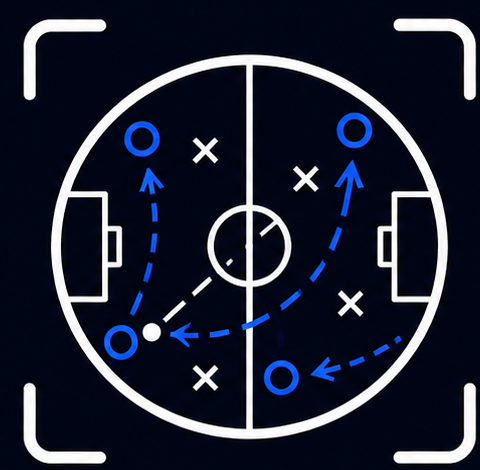
Tactical ratings describe emphasis, not quality of execution: a high pressing rating means the team presses often and high, not that the press is always successful. Simulations are illustrative reconstructions of a manager's stated patterns — they are animations of an idea, not replays of specific matches.
What we do not claim
GafferLens does not claim to measure performance, predict appointments, or reproduce official competition data. Where a value cannot be supported by held data, the site says so rather than filling the gap.
Found something wrong? Read our corrections policy →